
How Athletic Facility Design Enhances Sports Performance
Key Takeaways
Athletic facility projects typically demand compromises between budget, timeline, and functionality. Fabric structures solve this challenge through:
- Customizable designs that adapt to your specific sports programs
- Completely open interiors without columns obstructing views or limiting flexibility
- Natural lighting that reduces energy costs
- Superior acoustics that improve training quality
- Climate control for year-round programming regardless of weather
This guide explains how fabric construction delivers faster completion and lower operating costs without sacrificing the features your programs need.
Building an indoor sports facility often forces you to compromise—cut features to stay on budget, extend timelines to get what you need, or accept a one-size-fits-all design that doesn't quite work. Fabric structures eliminate those tradeoffs. You get the space your programs need completed faster and at a lower total cost.
Here’s how:
1. Customizable for Any Sport
Custom-designed fabric structures accommodate any sport configuration, soccer fields, basketball courts, tennis facilities, indoor tracks, batting cages, or multipurpose training spaces. You set the rules: configure sidewall heights or peak elevations, even access points to match your specific needs.
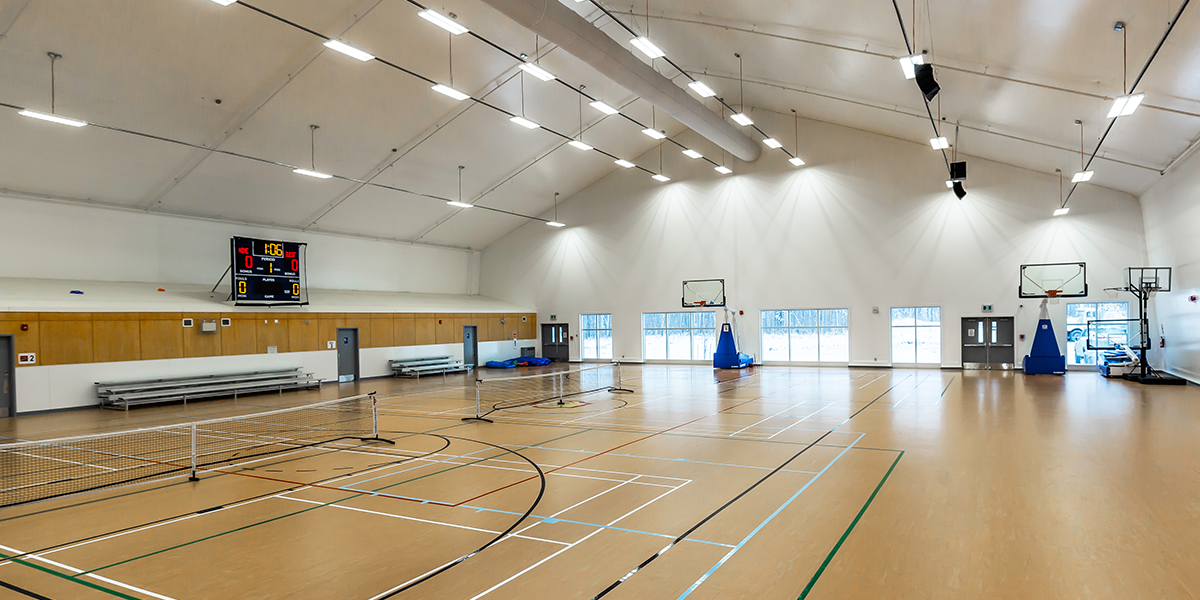
Clear-span construction creates completely unobstructed interiors—which is important for facilities housing multiple sports or evolving programs.
-
Real-world impact: Fox Creek Multiplex in Alberta combined four connected buildings totaling 58,363 square feet to house a hockey arena, aquatic center, fitness facility, and community administration center.
-
Martin Luther College's Betty Kohn Fieldhouse demonstrates how customization supports diverse athletic programming. The 150-by-240-foot facility features retractable batting cages, field turf, event netting, and a mezzanine-level golf simulator. This is all within a single structure that accommodates multiple sports simultaneously.
2. Completely Open Interiors
Interior columns obstruct sightlines and limit equipment placement. Fabric structures reduce these obstacles. Clear-span construction, supporting widths exceeding 300 feet without interior posts, creates completely open floorplans where every seat offers an unobstructed view and every square foot remains usable.
This freedom matters. You can turn around spaces for tournaments, convert courts for different sports, or add temporary seating without working around structural supports. Facilities host graduation ceremonies and community events in the same space used for athletic competitions.
Current trends in facility development emphasize versatile, multipurpose venues that strengthen community engagement. When your building adapts to diverse activities—from youth basketball leagues to municipal meetings to weekend tournaments—it maximizes value.
3. Natural Light Reduces Energy Costs
Traditional enclosed gyms rely on artificial lighting, which often leaves you with dark corners and uneven light. Fabric's natural translucency admits daylight through walls and roofs, eliminating shadows and reducing energy costs.
White ExxoTec™ fabric offers 12% translucency, which means athletes train in bright, evenly lit spaces. This lighting reduces electricity consumption during daytime hours, lowering your operational costs over the facility's lifespan.
Plus, natural light also creates better training environments, which can improve focus and performance.
4. Better Sound Quality
Steel and concrete structures amplify noise, creating echoes that distort speech and make it hard to hear. Fabric absorbs sound rather than reflecting it, which means athletes hear coaches clearly and referees' calls remain audible even during loud events.
Many communities use their fabric arenas for other community gatherings, like concerts or graduation ceremonies. These activities benefit from clear sound without distortion. When your facility serves multiple purposes, it maximizes your investment.
5. All Weather Performance
Weather shouldn't dictate your athletic calendar.
Fabric structures integrate insulation, HVAC systems and ventilation options to maintain consistent interior conditions, no matter the outdoor temperature. You can protect schedules and participant comfort through frigid winters or sweltering summers .
- Predictable access: When communities depend on consistent facility access, this matters. Schools can't reschedule practice when outdoor fields freeze over. Youth leagues need predictable training spaces. Tournament organizers need dependable venues. Fabric structures deliver.
- Operational savings: Fabric's thermal properties also reduce energy demands compared to steel buildings. The material's thermal neutrality moderates interior temperatures naturally, which means your heating and cooling systems work less to maintain comfort. Lower energy consumption means reduced operational costs over decades of use.
With proper insulation and mechanical systems, fabric arenas support year-round programming for any sport: indoor soccer, basketball, volleyball, tennis, track and field, wrestling, batting practice, you name it.
Getting Stakeholder Support
When presenting to decision-makers, focus on measurable community benefits: increased youth participation rates, expanded programming capacity, reduced operational costs, and faster construction timelines.
Government funding programs prioritize facilities that serve diverse populations and promote year-round community engagement. Fabric structures' flexibility and multipurpose design align with these funding priorities, potentially strengthening grant applications or bond proposals.
Point to successful fabric facility implementations in comparable communities—from comprehensive recreation complexes serving small municipalities to specialized training centers supporting professional and community programs. Real-world examples demonstrate that fabric construction delivers.
Why Communities Choose Fabric
Communities need buildings that work for multiple sports, serve year-round programming, control operating costs, and get completed on realistic timelines. Fabric structures address all of these. Traditional construction methods weren't designed for them.
When you're ready to look at how fabric construction can solve your facility challenges, connect with a team who understands both the technical requirements and the community dynamics of athletic facility development.
Frequently Asked Questions
Yes. Fabric buildings meet IBC, ASCE, and local building codes, and are engineered for your location's wind, snow, and seismic requirements.
Fabric construction typically takes months less than traditional methods, with pre-engineered components and efficient installation accelerating completion.
Minimal. Fabric surfaces clean naturally with rain or occasional pressure washing. ExxoTec™ fabric carries a 25-year warranty and resists UV degradation.
Yes. Steel I-beam frames support HVAC equipment, sound systems, scoreboards, basketball hoops, batting cages, and other athletic equipment.
Fabric structures withstand heavy snow, high winds, and temperature extremes. With insulation and climate control, they maintain consistent interior conditions year-round.