
Bulk Fertilizer & Commodity Storage: Designs That Improve Efficiency
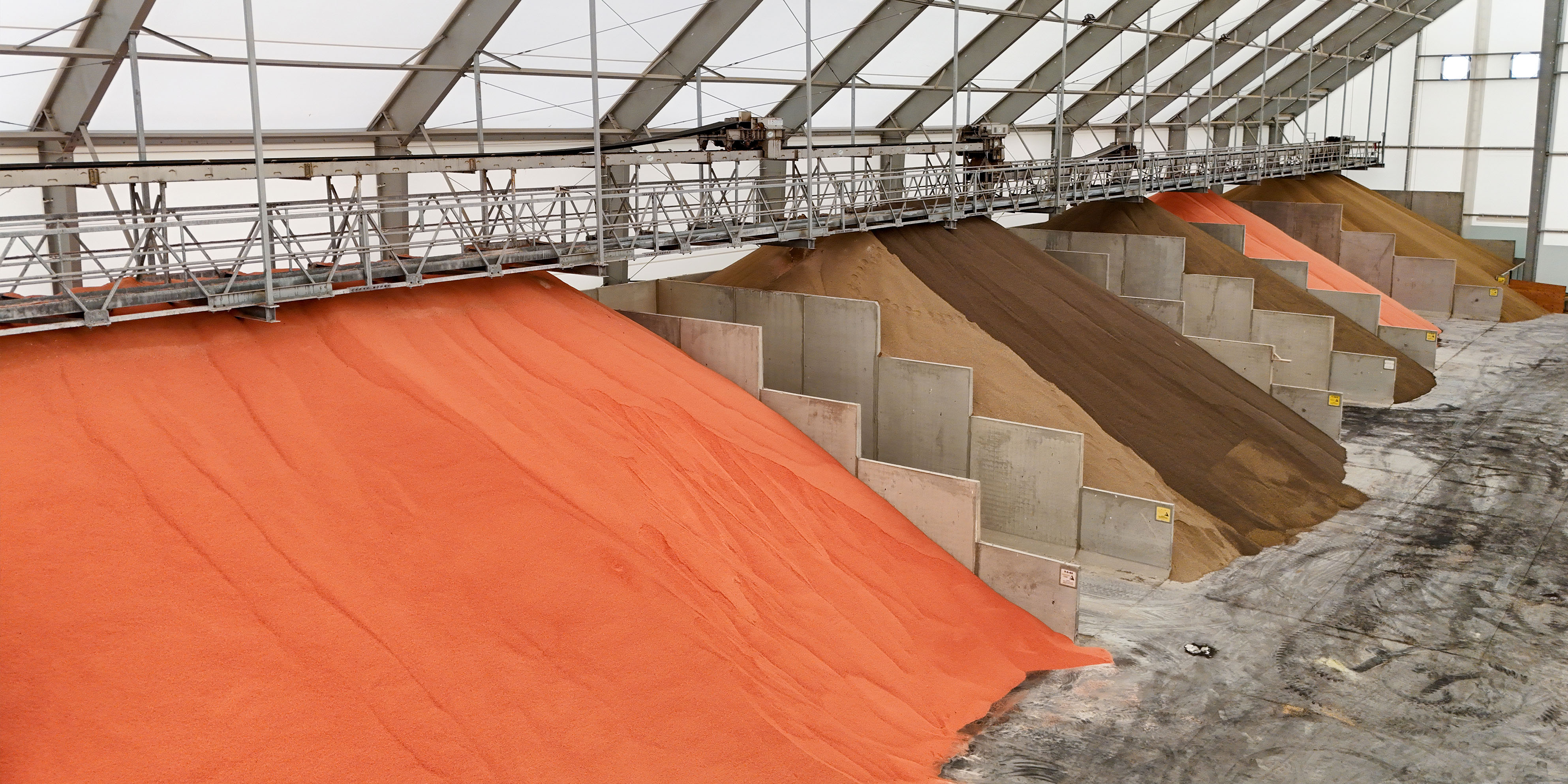
When it comes to bulk fertilizer storage buildings, grain facilities, salt sheds, and mining storage structures, it’s easy to assume the goal is simple: maximize capacity and minimize cost per bushel.
In reality, modern bulk commodity storage is far more complex.
Today’s operators must balance storage capacity, material handling efficiency, climate control, structural durability, corrosion resistance, and long-term lifecycle costs. Whether you’re storing fertilizer, salt, grain, aggregates, or mining materials, the right building design can dramatically improve operational efficiency while reducing maintenance expenses over time.
Precast Concrete Walls: Increase Capacity Without Expanding Footprint
One of the most impactful upgrades in a bulk storage building is incorporating precast concrete stem walls or push walls.
Precast concrete panels offer several advantages over cast-in-place concrete. They are typically more cost-effective, faster to install, and can be relocated if the building is ever moved. Most importantly, they provide significantly higher load-bearing capacity than traditional fabric sidewalls.
This strength allows operators to pile material—such as fertilizer, pulses, salt, or grain—directly against the walls. Precast walls eliminate wasted space and allow full use of the building’s interior square footage, increasing storage capacity without increasing building size.
Integrated Conveyors and Cranes: Improve Throughout and Safety
Material handling efficiency is critical in bulk fertilizer and commodity storage facilities. Many operations turn inventory multiple times per year. If loading and unloading processes are slow or inefficient, revenue and productivity suffer.
Attaching conveyors and cranes directly to the building frame eliminates floor obstructions and maximizes usable space. Integrated systems support heavier-duty equipment, improve loading and transloading speed, reduce safety risks, and minimize equipment damage.
Lean-To Additions: Flexible Expansion at Lower Cost
A lean-to addition is a cost-effective way to add functional space without significantly increasing the building’s footprint. Lean-tos are commonly used for equipment maintenance areas, additional storage, circulation pathways, or office and retail space.
They can be open or enclosed, insulated or non-insulated, and heated independently from the main structure, providing flexibility as operations grow.
Ventilation Systems: Protect Product Quality and Structure
Proper ventilation is essential in grain storage buildings and fertilizer facilities. Passive ventilation systems regulate interior conditions using natural airflow, reducing condensation and maintaining balanced temperatures.
Overhang intakes and ridge vents help prevent moisture buildup, extend product shelf life, and protect structural integrity. Active ventilation systems can be added when precise climate control is required.
Corrosion Protection: Why It Matters More Than Ever
Fertilizer dust, salt exposure, mining chemicals, and moisture create highly corrosive environments inside storage buildings. Without proper protection, structural steel can deteriorate prematurely.
Hot-dipped galvanizing has long been used to slow corrosion, but it does not eliminate it. In some mining applications, galvanized coatings may even react negatively with stored materials.
Epoxy-Coated Steel: Advanced Defense for Harsh Environments
Modern epoxy coating systems create a durable barrier between corrosive materials and structural steel. Compared to galvanizing, epoxy coatings offer stronger chemical resistance, improved abrasion protection, easier repair, and customizable protection levels.
Proper surface preparation through abrasive blasting ensures maximum adhesion and long-term performance.
Designing for Long-Term Value
While upgrades such as precast concrete walls, integrated material handling systems, ventilation improvements, and epoxy-coated steel increase initial investment, they significantly reduce long-term costs.
Lower maintenance, reduced downtime, extended structural lifespan, improved safety, and better product protection all contribute to stronger long-term return on investment.
Frequently Asked Questions (FAQ)
Buildings designed with corrosion-resistant steel frames, proper ventilation systems, and reinforced concrete push walls perform best in fertilizer environments.
They allow materials to be piled directly against the perimeter, eliminating wasted space and increasing usable storage capacity.
In highly corrosive environments, epoxy-coated steel provides superior chemical resistance and easier repair compared to galvanizing.
Ventilation reduces condensation, controls temperature fluctuations, and protects both stored materials and the building structure.
With proper corrosion protection and design, bulk storage buildings can perform reliably for decades with reduced maintenance costs.