
EpoxxiShield™ vs. Hot-Dip Galvanizing: Corrosion Protection Performance Data in Marine Environments
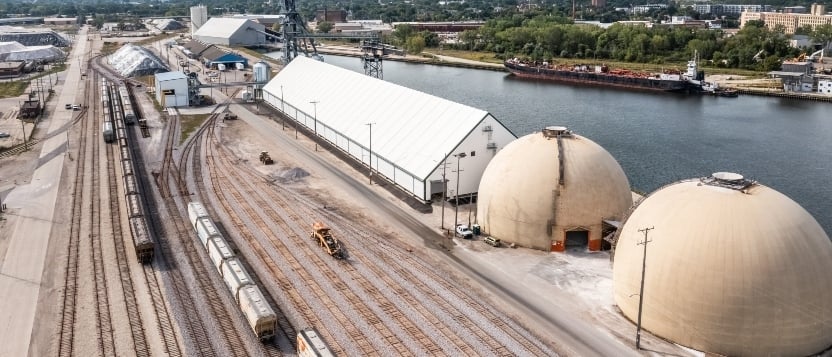
You're planning a port facility that needs to operate for 30+ years. The coating choice you make today determines if you'll face emergency repairs in year five or smooth operations in year 20.
Hot-dip galvanized structures within one mile of the coast typically show rust within 5-7 years, forcing unplanned maintenance that disrupts operations and blows budgets.
Marine Conditions Demand Better Protection
Every day your facility shuts down for corrosion repairs costs money. Port and waterway facilities face constant exposure to salt air, humidity, and extreme weather that traditional galvanizing can't handle long-term.
When corrosion forces emergency repairs, you can't wait for ideal weather or convenient timing. You fix it now, at premium costs, while operations halt.
How Galvanizing Performs in Marine Environments
Galvanizing faces specific challenges in coastal settings. Galvanized coatings could lose up to 15 micrometers per year in seawater. At that rate, your specified coating thickness determines exactly when you'll need maintenance or replacement.
Lab testing reveals the performance difference. After 2,000 hours of salt fog exposure, hot-dip galvanized samples showed significant rust (1% to 10% of the surface area). EpoxxiShield™—a comprehensive coating system that includes proper surface preparation and different levels of epoxy paint finish depending on building use and environment—showed virtually no corrosion under the same conditions.
Marine environments create unique corrosion mechanisms: Wave action constantly removes protective scales from zinc surfaces, exposing fresh metal to corrosion. This mechanical erosion combines with chemical attack to accelerate coating loss in tidal zones and splash areas. Generally, the warmer the water, the higher the attack on zinc, meaning facilities in warmer coastal regions face more aggressive corrosion conditions than those in colder waters.
How EpoxxiShield™ Protects
EpoxxiShield™ creates a continuous barrier that protects structural elements significantly better and longer than hot-dip galvanizing. Unlike zinc coatings that sacrifice themselves, epoxy maintains its thickness year after year.
This stability translates to predictable budgets. You plan maintenance, not react to failures. Your facility operates without corrosion-related shutdowns disrupting schedules and contracts.
There are different EpoxxiShield™ options based on your environment. Marine environments require thicker applications than inland facilities, with specialized formulations designed for the harshest coastal conditions.
What This Means for Your Facility
- Continuous Operations: While galvanizing loses thickness daily, EpoxxiShield™ maintains full protection. You avoid unexpected shutdowns.
- Budget Certainty: Epoxy coatings maintain their protective barrier for decades without material loss. You know your coating will last, making accurate 20-year budget projections possible.
- Compliance Confidence: When inspectors check your facility, proper corrosion protection keeps you operational. Failed coatings trigger citations, fines, and forced repairs.
- Asset Value: Facilities with documented long-term corrosion protection command higher valuations. Buyers know they're not inheriting a maintenance nightmare.
Real-World Marine Applications
Port and waterway facilities demonstrate how proper corrosion protection extends operational life. The DeLong Company facility features epoxy-coated frames specifically engineered to withstand coastal conditions, maintaining structural integrity despite constant salt air exposure.
For facilities storing corrosive materials like salt or fertilizer, the combination of EpoxxiShield™ coatings and PVC cladding provides ultimate protection—keeping corrosive elements completely separated from steel components.
Making the Right Decision
Your specification decision affects every year of your facility's operation. Consider:
- Will emergency repairs in year 5 cost more than specifying better protection today?
- Can your operations handle unexpected multi-week shutdowns?
- What happens to your contracts if corrosion forces facility closure?
- How much is predictable, minimal maintenance worth over 20 years?
The price difference between galvanizing and EpoxxiShield™ becomes insignificant when you avoid just one emergency shutdown.
Your Facility's Future
Don't let corrosion control your maintenance schedule and budget. Port facilities using corrosion-resistant solutions operate with confidence, knowing their structures resist marine conditions for decades, not years.
Your next project deserves protection that matches your operational requirements.
Frequently Asked Questions
HDG structures within one mile of the coast often show rust within 5-7 years on surfaces directly exposed to ocean spray and salt winds. In the most aggressive splash/tidal zones, maintenance may be needed in just 2-3 years.
In independent lab testing with over 2,000 hours of continuous salt fog exposure, the HDG sample showed rust on 1-10% of the surface area, while the EpoxxiShield™ sample showed negligible corrosion (0.01% or less of the surface area).
Wave action continuously removes protective zinc scales that form on the surface, exposing fresh zinc to seawater. This mechanical erosion combined with chloride attack creates a repeating cycle where corrosion products form, dry, and wash away, rapidly consuming the zinc coating.
In areas with high salt levels, galvanized steel may lose up to 15 micrometers of zinc coating per year. At these rates, coating thickness determines exactly when maintenance or replacement will be needed, making budget planning challenging for facility operators.
Unlike zinc galvanizing which sacrifices itself and loses thickness over time, epoxy coatings create a continuous barrier that maintains its protective thickness year after year. This stability translates to predictable maintenance budgets and prevents unexpected shutdown costs.